Hello
I'm Dad Pharmacist.
The new year of 2021 has dawned.
For many people, 2020
seems to have been a year they will never forget.
I sincerely hope that in 2021, in a world free of COVID,
you have a happy year…

Recently, products that claim to help you sleep better
are being released.
Valerian root (valerian extract), Lactium (hydrolyzed milk protein)
rice bran alcohol extract, ecklonia cava extract,
chamomile extract, and more..
Looking at the broad picture,
health functional foods
of vitamins or the supplementation of minerals such as calcium and magnesium, etc.
basic nutritional supply products were released first, and then
products for sleep correction and memory improvement
have recently been released as functional products.
Even in pharmaceuticals,
Like hypertension and hyperlipidemia,
medications were being developed to treat diseases,
and at some point,
for things like hair loss, erectile dysfunction, and acne treatment,
medications began to be developed to improve quality of life —
it feels very similar.

Anyway…
Today, on the topic of sleep,
I'd like to have a talk.
Sleep (Sleep)
The activity of a brain that has accumulated fatigue,
periodically restored —
a physiological state of loss of consciousness.
There are people like that around us, right?
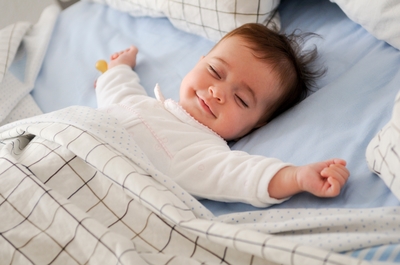
They lie down, close their eyes, and fall asleep immediately.
They can't fall asleep easily, toss and turn, and barely manage to fall asleep.
Or
Whenever they sleep, even just for a short while, they sleep deeply and sweetly.
Even after sleeping for a long time, they sleep lightly and wake up tired.
What is the reason for this?
It is
related to the sleep cycle.
Sleep Cycle
Sleep is
REM sleep (REM sleep)
non-REM sleep (non-REM sleep)
composed of 2 types.
REM sleep (Rem sleep)
Light sleep just before waking
The phase where dreams occur most frequently
During this phase, rapid eye movement occurs,
it is a phase where the body is asleep but the brain is active.
Non-REM sleep (Non-REM sleep)
Sleep in stages 1 to 4 (1 to 4 stage) that is not REM sleep
There is almost no eye movement,
heart rate and breathing noticeably decrease,
and it is a phase where the muscles relax.
Into light sleep (stages 1 to 2) and deep sleep (stages 3 to 4),
it can be divided.
As shown in the figure below
REM sleep and non-REM sleep repeat in cycles of approximately 90 to 120 minutes,
in 8 hours of sleep,
normally cycling through approximately 4 to 5 times,
making up a full night's sleep.
Among those, non-REM sleep spans about stages 3 to 4,
and deep sleep appears 2 times.

(Source: https://en.wikipedia.org/wiki/Rapid_eye_movement_sleep)
What it means to have slept well,
if we break it down scientifically,
can be connected to these patterns of REM sleep and non-REM sleep.
If the moment you wake up is near REM sleep,
because you woke up from a light sleep state,
it is said that you feel less fatigue when you wake up,
if you wake up near non-REM sleep,
because you woke up from a deep sleep state,
you wake up in a groggy state
and it is said that you feel extreme fatigue.
Back in my school days, I thought you had to sleep in units of 1 and a half hours
having heard somewhere that it would make you less tired,
nighttime sleep or naps
I remember sleeping in units of 1 hour and a half,
and it turns out there was some basis for it after all^^;;
Sleep Disorder (Sleep Disorder)
Being unable to get healthy sleep,
or even when getting sufficient sleep,
a state of being unable to maintain wakefulness during the day,
or having a disrupted sleep rhythm,
when sleeping or when awake,
a very broad concept encompassing states of experiencing difficulty
National Health Information Portal Medical Information
Causes of Sleep Disorders
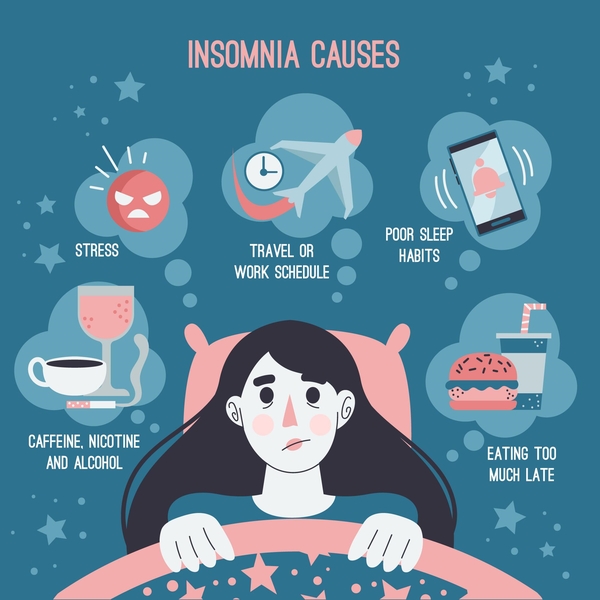
Recently, the number of patients with sleep disorders has been increasing.
The causes include
increased stress, aging,
substance abuse such as caffeine,
and changes in social life and sleep cycles due to advances in science,
among others,
Types of Sleep Disorders
Generally, sleep disorders are classified into 2 types,
dyssomnias and parasomnias.
Sleep dyssomnias involve changes in the sleep-wake cycle,
and include insomnia, hypersomnia, narcolepsy, and sleep apnea.
Parasomnias include nightmares, night terrors, sleepwalking, and more.
Symptoms of Sleep Disorders
The symptoms seen in various sleep-related conditions are
drowsiness, night terrors, sleepwalking, and REM sleep behavior disorder,
sleep disruption, sleep-entry/sleep-onset hallucinations, sleep paralysis, and more.
It is not simply a matter of not being able to fall asleep,
but also includes unusual events that occur during sleep.
Therefore, information obtained from the person who sleeps with you
It serves as important data for diagnosis.
Treatment of Sleep Disorders
In order to treat sleep disorders,
with drug therapy,
sleeping pills are not unconditionally
prescribed,
non-drug therapy is carried out first.
This is in line with the term sleep hygiene
and is consistent with it.
Sleep Hygiene
: Basic principles for falling asleep well
① Avoid naps.
If you are really sleepy, wait until 5~8 hours have passed since waking up in the morning,
and take only about 10~15 minutes of nap.
Also, set a fixed amount of time to spend in bed,
and if that is 8 hours,
do not lie in bed for 8 hours or more.
If you cannot fall asleep, or if you wake up in the middle of the night and cannot fall back asleep,
you are better off getting out of bed and trying to do something else.
If you feel sleepy while doing something else,
go back to bed at that point.
② Exercise regularly every day.
However, you must finish exercising at least 6 hours before going to bed.
③ You should avoid substances that interfere with sleep.
If you smoke, after 7 in the evening,
do not smoke.
Avoid caffeinated items such as coffee, cola, and chocolate,
and alcohol should also be refrained from as much as possible.
④ Create an environment suitable for sleep.
Place the clock somewhere that is not visible from bed,
Even if you wake up at night, do not look at the clock.
Keep the bedroom dark and quiet,
and use earplugs or an eye mask if necessary.

⑤ Rather than trying too hard to fall asleep,
try to relax and make yourself feel at ease.
If sleep does not come for at least 10 minutes, get up
and do simple, repetitive tasks,
and wait until you feel sleepy.
⑥ The bed must be used only for sleeping.
You must give up the habit of working in bed.
Do not watch TV or read in bed.
⑦ Avoid severe hunger or overeating before going to bed.
A warm bath before bed may be helpful.

In the next post,
we will look into what sleep-related ingredients are being released.
We'll check it out 🙂
I'll be back soon.
From Wangsimni 지안약국,
this was Dad Pharmacist.
Since the topic this time is sleep,
Tonight, sleep especially well~ 🙂
지안약국
서울특별시 성동구 왕십리광장로 17 4층 지안약국
(References: Korean Sleep Research Society, Seoul Asan Hospital – Disease Encyclopedia)
Naver original: View original post