Hello,
I am Dad Pharmacist.

When a prescription is dispensed at the pharmacy,
people often ask how long the medicine can be stored.
There are quite a few inquiries like this.
If there is medicine left over after taking it,
many people store it and then take it later when they have similar symptoms,,
And as for medicines bought in advance as household remedies,
there are also many cases where they are kept at home for a long time without being taken.
However,
apart from the expiration date,
have you ever thought about the use-by date?
Use-by date vs. Expiration date
The expiration date is, literally, the period of distribution,
that is, it refers to the period during which the product can be distributed and sold at retail stores (in the case of medicines, pharmacies,,).
The use-by date is the period during which it can be used,
that is, it refers to the period during which a consumer can use the product.
Working at a pharmacy,
without any awareness about the use-by date,
It is quite common to see cases where people simply take medicine they have at home.
They brought it in saying they took it because it was at home,
and sometimes it turned out to be a dispensed medication that was several years old…
After opening a bottle-packaged syrup,
some people asked whether it was okay to keep giving it all the way until the expiration date printed on the label,
and there were indeed people who kept on giving it,,
I thought it would be good to take a moment to think about expiration periods like this,
so I'd like to put together a summary.
There may be slight differences depending on the product and its condition,
but if we lay out the general principles, they are as follows.
|
Type |
Packaging Condition |
Medication Use-by Period |
|
Tablets / Pills
|
When received in the original container as-is |
Within 1 year of opening |
|
When transferred into a different pill container |
Within 6 months |
|
|
When individually packaged in PTP or blister packaging |
Until the expiration date on the packaging (Some special medications are excluded) |
|
|
When dispensed in a medicine packet |
Within 60 days |
|
|
Powder medicine |
When tablets are ground into powder and placed in a medicine packet (Compounded prescription for children) |
Within 30 days (Depending on the type of powder medicine, this may be much shorter) |
|
Syrup |
When received in the original container |
Within 28 days after opening |
|
When dispensed by transferring into a dosing bottle |
Within 14 to 28 days |
|
|
When two or more syrups are mixed together in a dosing bottle |
Within 14 days |
|
|
For dry syrup preparations |
Follow the product instructions. (In many cases, 7 to 14 days after dispensing) |
|
|
Ointments and Eye Drops |
When received as ointment in its original tube |
Within 6 months of opening (The cap must always be closed properly) |
|
When dispensed in a compounding ointment container |
Within 30 days |
|
|
Sterile products: eye drops and eye ointments |
Within 28 days of opening |
|
|
1-use eye drops |
Discard immediately after use |
(Source: 어여모)
(If you are viewing on mobile, you can see the table more clearly by switching to the PC version at the bottom of the page.)
Mothers who are sensitive to additives
are often quite sensitive about the presence of preservatives,,
In fact, it is precisely thanks (?) to preservatives that expiry periods like those above can be set.
This is because without preservatives, the product would have to be discarded immediately after opening,,
Conversely, aside from single-serving pouch syrups marketed as preservative-free, such as 챔프시럽 and 이지쿨시럽,
it is safe to say that almost all medicines contain preservatives.
As preservatives are used in many medicines in this way,
That much safety has been proven,
and you can understand that taking it poses no major problem.
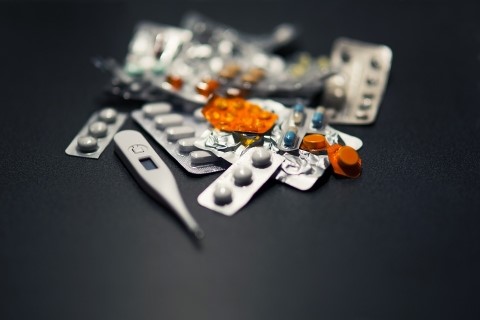
Why not take this opportunity to check their expiration dates?
Thank you 🙂

For online consultations, find us on KakaoTalk Plus Friend "지안이네약방"
Naver original: View original post