Hello.
This is Dad Pharmacist at Suwon Star Pharmacy.

Every winter, when skin becomes dry,
there are certain questions I get asked noticeably more often.
"My heels are turning white and flaking."
"Even when I apply moisturizer, they crack again."
"It feels like the calluses are getting thicker and thicker."
I get these questions all the time.
Suwon Star Pharmacy – 케라논연고
In most of these cases,
it's not simply dry skin —
 rather, the skin has been adapting to repeated irritation,
and the stratum corneum (outermost skin layer) has thickened as a result.
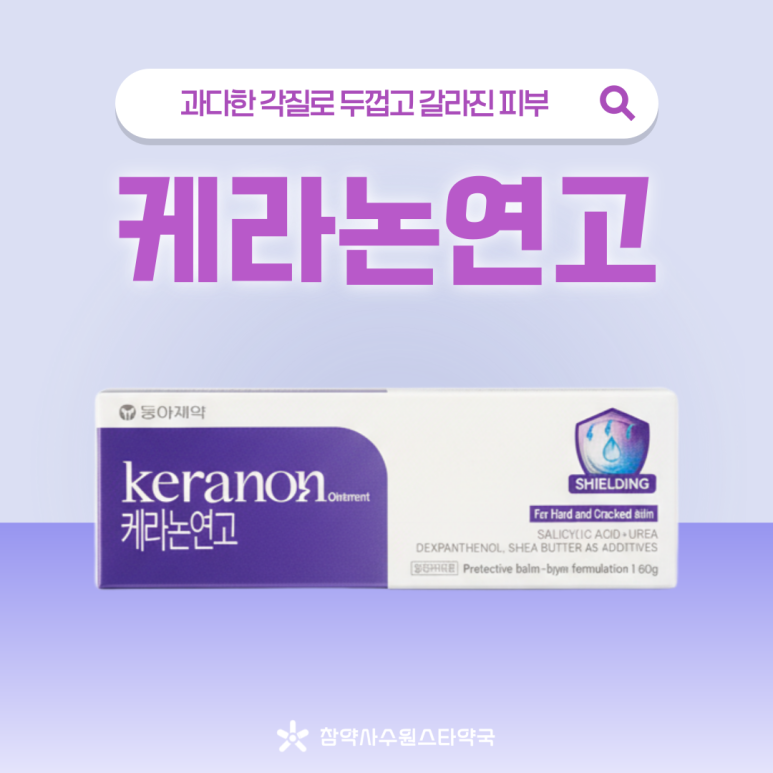
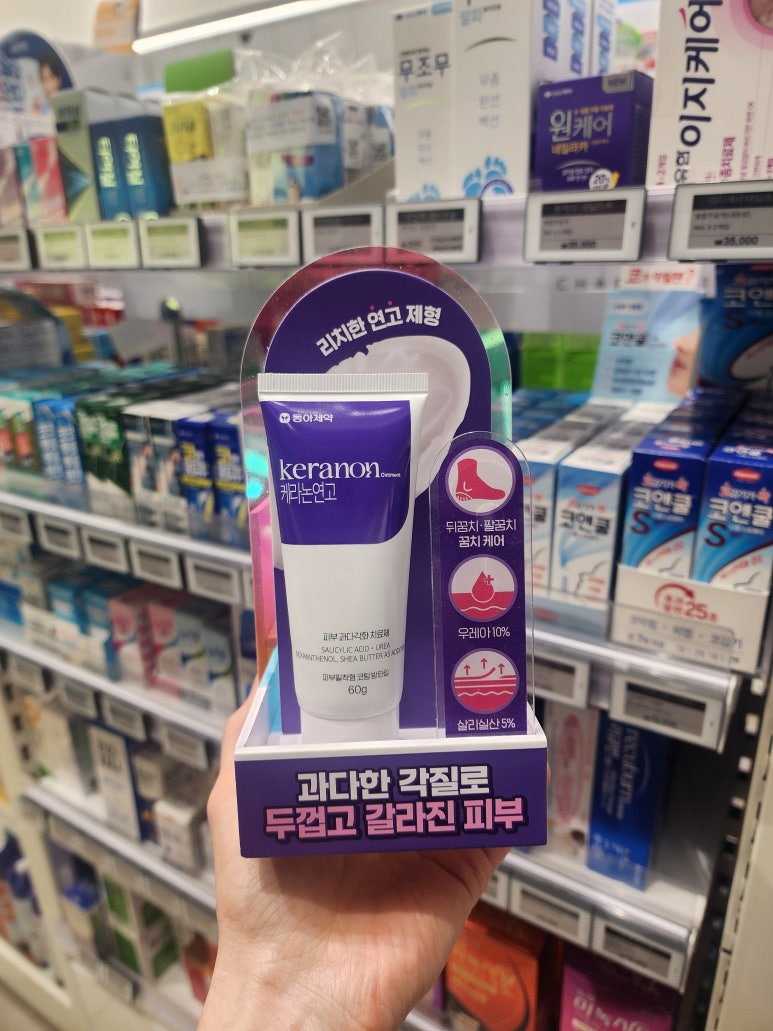
Today I'd like to introduce a newly launched product from Dong-A Pharmaceutical,
designed for skin that has become rough and cracked due to callus build-up,
used for the purpose of softening and managing thickened skin:
케라논연고.
Suwon Star Pharmacy – 케라논연고
Why do calluses keep getting thicker?
Skin has a strong tendency to protect itself.
When friction, pressure, and dryness are repeated,
the skin responds in a direction of "needing to become tougher."
-
Working environments that require standing for long periods
-
Hard shoes and repeated pressure
-
Feet that sweat heavily, or conversely, feet that are excessively dry
-
Habits of frequently scraping or picking at calluses
When these conditions accumulate,
✔ calluses keep building up,
✔ the surface becomes rougher,
✔ Moisturizers tend to just sit on the surface and slide off.
At this point, many people have moved into a stage where moisturizing alone doesn't make a noticeable difference.
Suwon Star Pharmacy 케라논연고
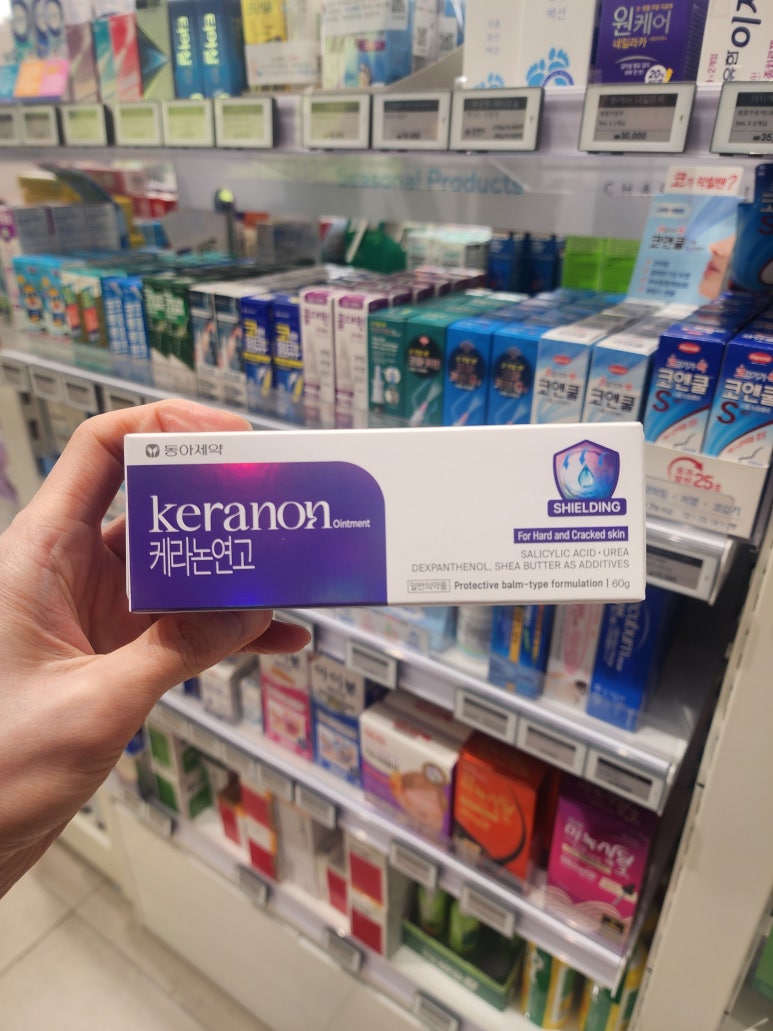
케라논연고 is a product focused on callus and rough skin management.
Unlike ordinary body creams or foot creams,
rather than aiming to replenish moisture,
it works to soften and smooth skin that has already thickened and hardened,
so that subsequent moisturizing care can be more effective.
For that reason,
✔ Heels that have hardened due to built-up calluses
✔ The soles of the feet that crack repeatedly
✔ Skin where creams don't seem to last very long
these are common situations in which use of this product is considered.
Suwon Star Pharmacy 케라논연고
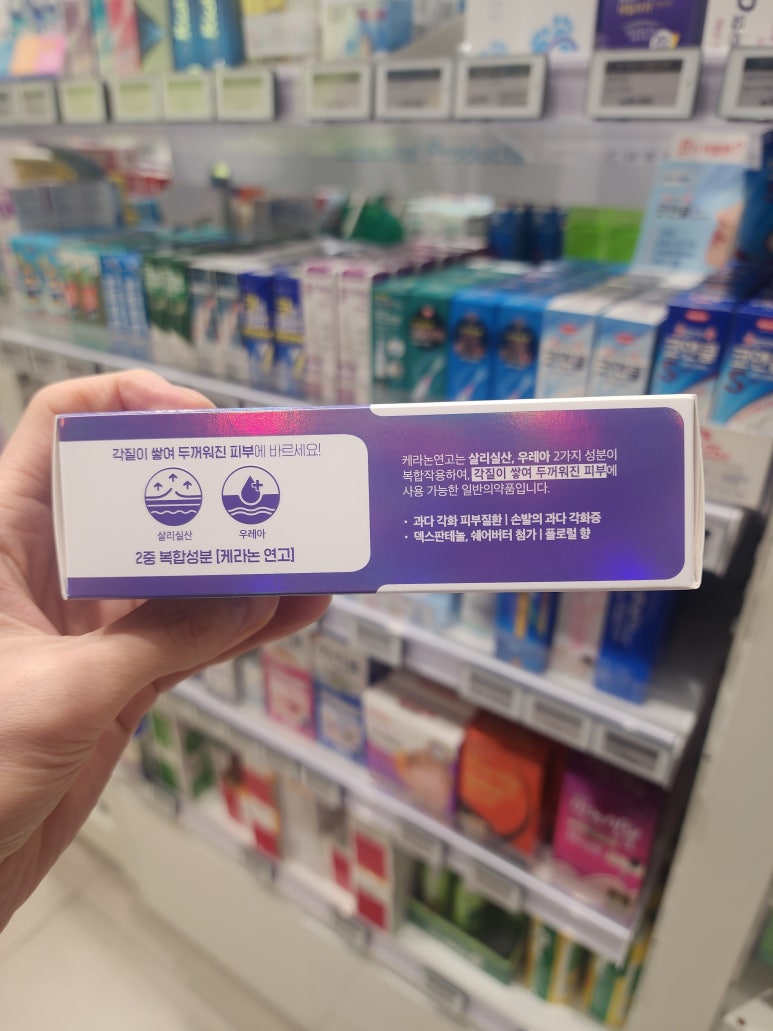
What ingredients does 케라논연고 contain?
✔ Salicylic acid 5%
It works by loosening the bonds between layers of thickened skin,
allowing the skin to soften gradually.
Rather than forcibly removing calluses,
it is best understood as an ingredient that acts to gently ease hardened skin.
✔ Urea 10%
-
An ingredient widely known from urea ointments
-
It helps soften hardened skin
-
and supports moisture retention within the skin.
It is helpful to think of it as playing a role of 'gently loosening the callus layer.'
✔ (Additives) Dexpanthenol · Shea butter
-
To help prevent the treated skin from cracking easily again,
-
these are additives that help maintain the skin barrier.
After the callus layer has softened,
they are best understood as supporting ingredients that help reduce irritation and maintain moisture.
케라논연고 is recommended in these situations.
-
When the heels turn white, peel, and crack
-
When calluses on the soles of the feet keep coming back
-
When the elbows or knees look noticeably thick and rough
-
When foot cream or body cream alone is not enough
Especially when you hear things like, "It feels fine when I apply it, but a few days later the skin becomes rough again,"
If that kind of comment comes up,
it is quite likely that the time has come to consider keratolytic (skin-softening) care alongside regular moisturizing.
Usage TIPs from the pharmacist
-
Use after showering, once the skin is completely dry
-
Apply a thin layer and allow it to absorb fully
-
When using on the feet, wear socks afterward
-
Once the rough skin has eased, use alongside a moisturizer
케라논연고 is not so much about continuously coating the skin;
rather, it is an ointment aimed at softening and relieving thickened skin layers,
so once the condition improves, it is advisable to reduce the frequency of use.
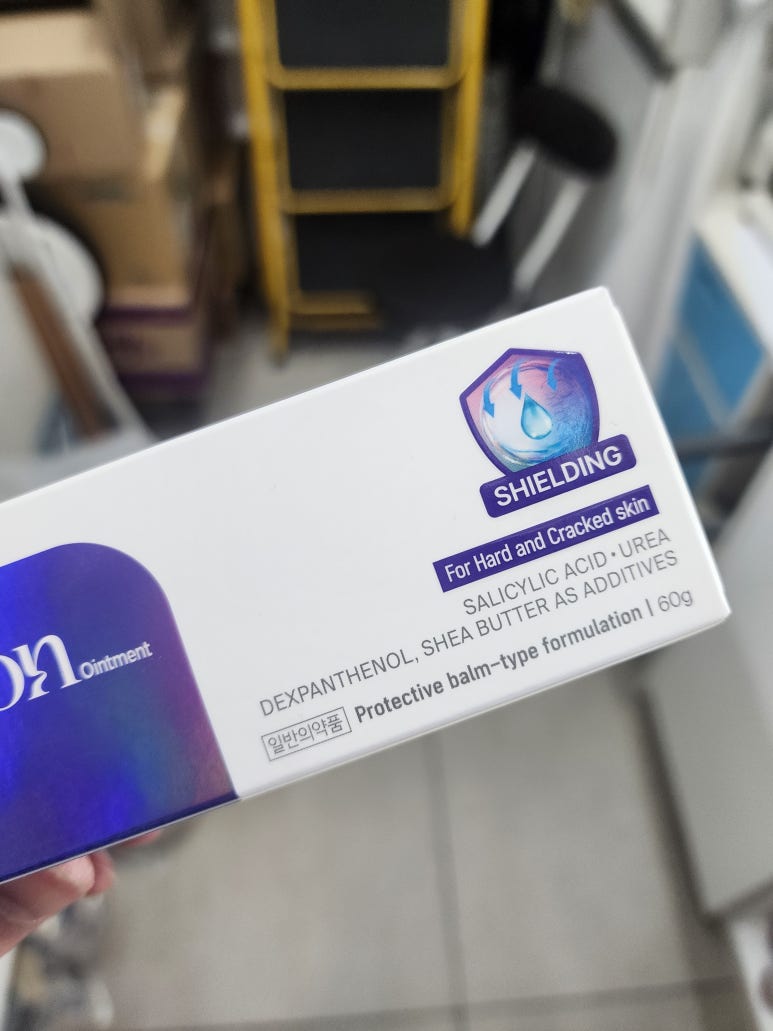
Suwon Star Pharmacy 케라논연고
케라논연고 — 3 Frequently Asked Questions
Q. Is it okay to apply 케라논연고 every day continuously?
During periods when the skin is heavily thickened, it may be used 1–2 times per day.
However, once the skin has become softer,
it is recommended to reduce the frequency of use or switch to moisturizer-based care.
Q. Is it okay to put on socks after applying it?
When using it on the heels or the soles of the feet,
wearing socks helps the ointment stay in place,
which can be helpful in terms of ease of use.
However, please avoid applying it too thickly.
Q. Is it okay to apply it to the face?
Due to the irritating nature of salicylic acid, it is recommended to avoid applying it to the face.
It can be used on all body areas; however, rather than the face, areas where dead skin has accumulated and thickened
We recommend applying it to areas such as the elbows, heels, and knees.
Please check the following before use
-
Avoid use on the face and around the eyes
-
Do not use on wounds, weeping skin, or inflamed areas
-
If stinging persists, discontinue use and seek consultation
-
Please avoid using multiple exfoliating products at the same time
Calluses are a signal telling you about your current skin condition.
A final word we'd like to share
Even with the same cracked heels,
the cause varies from person to person.
Whether it's due to lifestyle habits,
pressure and friction,
or skin type issues,
the approach to care should differ accordingly.
So rather than judging on your own,
the most accurate approach is to have your current condition assessed in person and receive a consultation.
At Suwon Star Pharmacy,
rather than recommending a product first,
we first look at your skin condition and lifestyle patterns
and guide you toward the right care approach.
If you have concerns about calluses,
please visit the pharmacy with an open mind
and let us help ease your worries a little.

That's all from us — the place near Jangan-gu, Gwonson-gu, Paldal-gu, and Yeongtong-gu in Suwon where you can find 케라논연고!
 This was Dad Pharmacist at Suwon Star Pharmacy, open 365 days a year, located on basement floor 2 of Starfield Suwon.
Suwon Star Pharmacy · Directions
Suwon Star Pharmacy · Starfield Suwon, B2
175 Suseong-ro, Jangan-gu, Suwon-si, Gyeonggi-do, South Korea
Open daily 10:00–22:00
Phone (Korea): 0507-1483-1429
Naver original: View original post